

By Robert Majdak Sr. MBA
Management Insights Group, LLC
November 9, 2026
Applying the studies of Philip Kotler in actial business situations.
I regularly sit across the table from small business owners and nonprofit leaders who work tirelessly, deliver quality, and still struggle to explain why a client should choose them over the firm down the street. In my experience, these organizations rarely lose to better competitors; they lose to clearer ones. When prospective clients cannot immediately grasp why an organization deserves their trust and their money, they default to the cheapest option or the most familiar name. The remedy is a precisely defined core value proposition, and the most reliable guide I know to that discipline is Philip Kotler, whose work, from Marketing Management to Marketing 5.0, remains the intellectual foundation of modern marketing practice.
What Kotler Means by Value
Kotler defines customer-perceived value as the difference between the total benefits a customer expects and the total costs that customer incurs, including money, time, energy, and psychological effort. Because I spend much of my professional life inside financial statements, I appreciate the rigor of that formulation: value behaves like a net figure, and both sides of the ledger matter. Value is never what you claim to deliver but what customers believe they receive, measured against everything they surrender to obtain it. A firm that charges a premium can still represent extraordinary value when it eliminates friction, reduces risk, and spares clients hours of uncertainty.
Kotler also separates the value proposition from the product itself. In Marketing Management, he and Kevin Lane Keller describe the value proposition as the full set of benefits on which a company positions its offering, a promise about the experience customers will have rather than a catalog of features. Your service package, software, or inventory is merely the vehicle; the proposition is the destination.
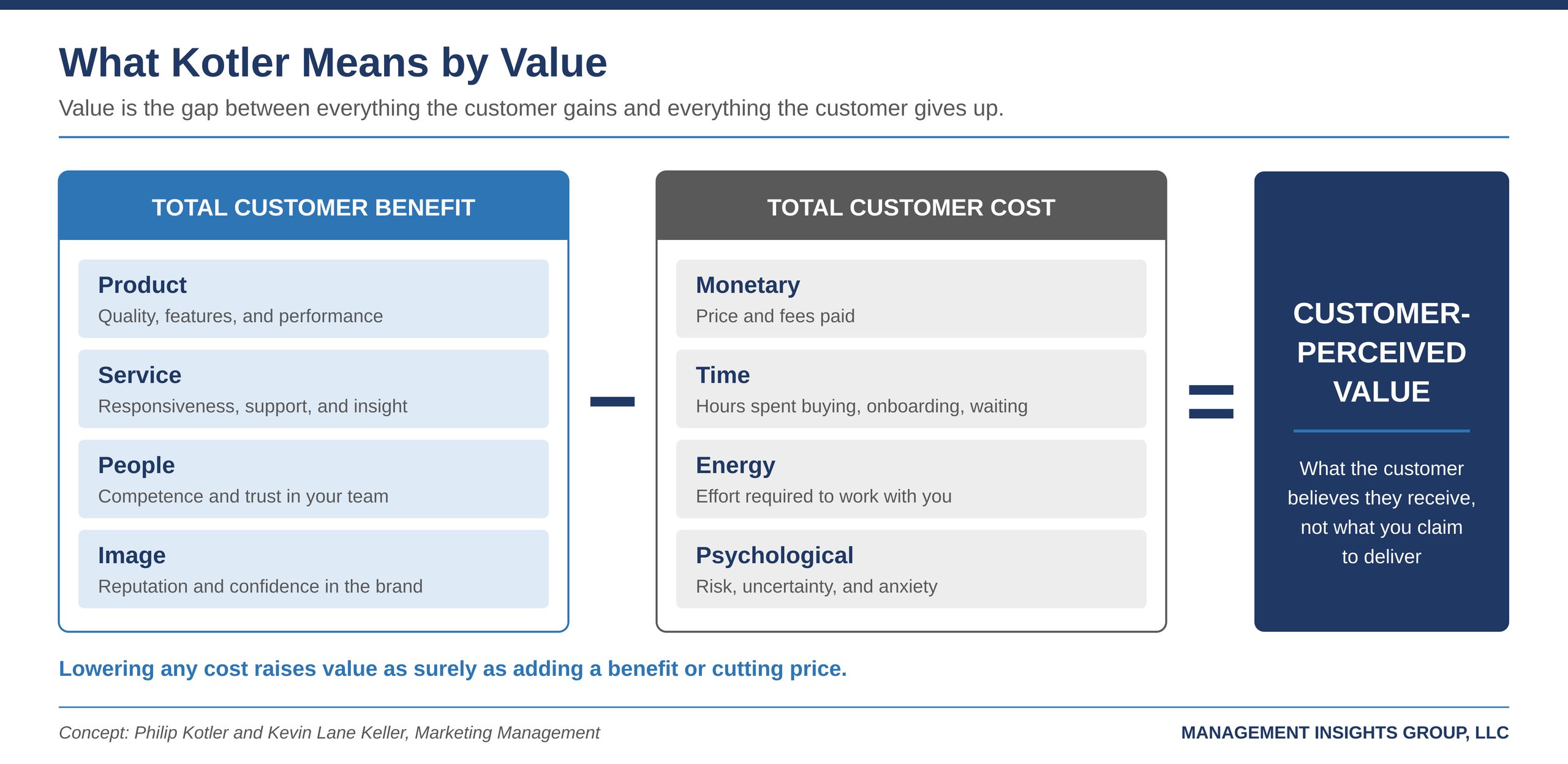
Figure 1. Customer-perceived value: total customer benefit minus total customer cost.
Positioning: Choosing Where to Stand
No organization can be all things to all people, and Kotler is unequivocal on this point. His framework of segmentation, targeting, and positioning requires leaders to divide the market into meaningful groups, select the segments they can serve most profitably, and then occupy a distinct place in the minds of those buyers. Leadership demands the same discipline: an objective that is not defined cannot be achieved, and a value proposition without a defined target is merely a slogan.
In Principles of Marketing, Kotler and Gary Armstrong outline the value positions available to any firm: more for more, more for the same, the same for less, less for much less, and the difficult-to-sustain more for less. I ask every owner I advise to identify honestly which position the business occupies today. Most discover they have drifted into an undefined middle ground, offering roughly what competitors offer at roughly the same price, which is the most dangerous place in any market.
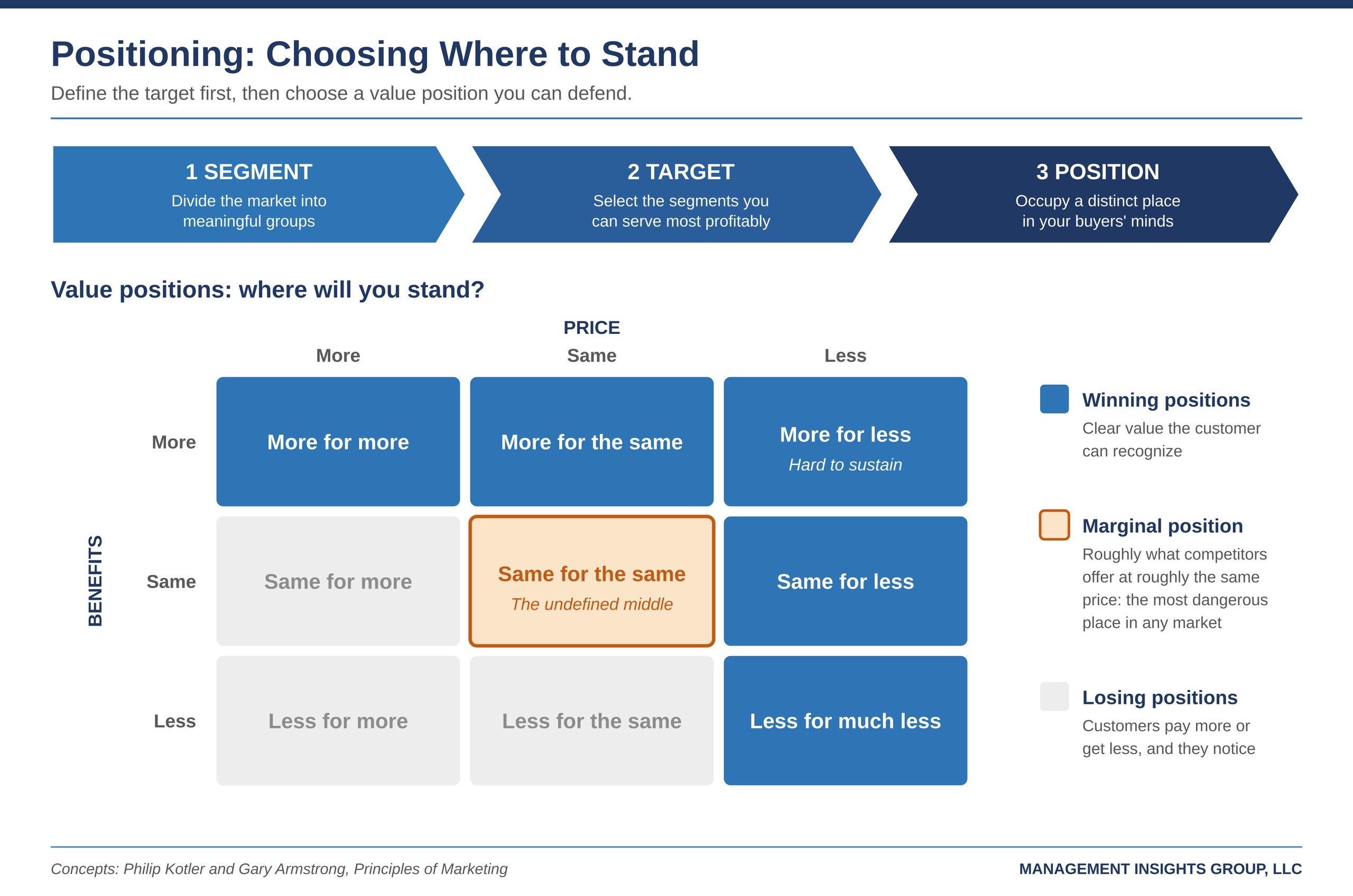
Figure 2. Segmentation, targeting, and positioning, with the nine value positions.
Points of Parity and Points of Difference
Kotler and Keller further teach that effective positioning rests on two elements. Points of parity are the attributes customers consider mandatory for credibility in a category; meeting them simply earns consideration. Points of difference are the attributes customers associate strongly with your brand, evaluate favorably, and believe they cannot find to the same degree elsewhere. At Management Insights Group, we treat accurate books, reliable reporting, and technical competence as the price of admission, not as our advantage. Our differentiation lies in proactive insight that anticipates problems before they become crises and in reporting that translates numbers into decisions leaders can act on with confidence.
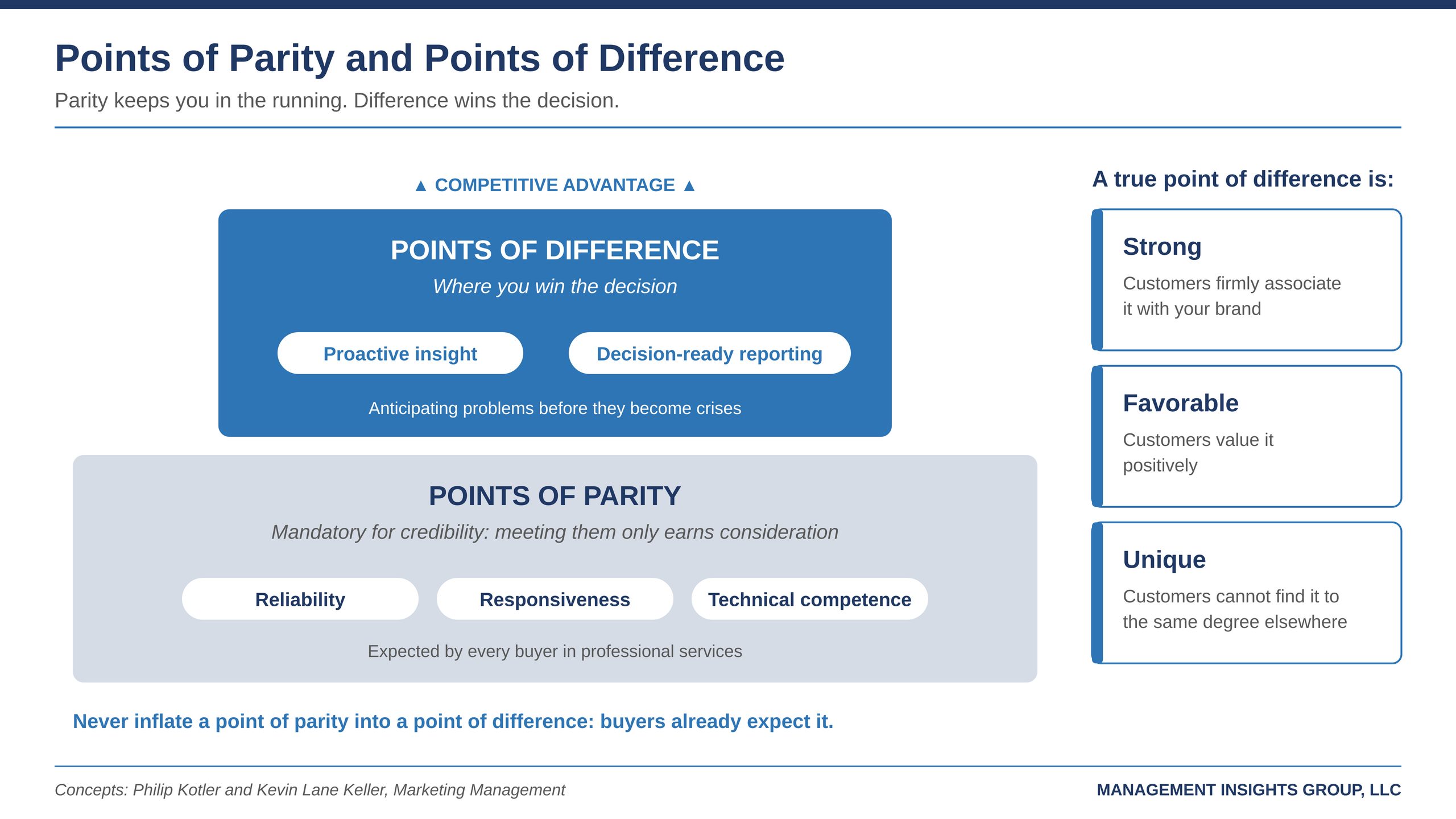
Figure 3. Points of parity earn consideration; points of difference win the decision.
From Transactions to Meaning
Kotler’s later work broadens the concept considerably. In Marketing 3.0 and its successors, written with Hermawan Kartajaya and Iwan Setiawan, he argues that customers increasingly choose organizations that address their aspirations and values, not merely their functional needs. Marketing 4.0 traces the customer path from awareness to advocacy, demonstrating that in a connected economy, loyal customers become an organization’s most persuasive marketers. A strong value proposition therefore accomplishes more than winning the first engagement; it equips satisfied clients with the language to recommend you.
Building Your Proposition
I recommend a disciplined four-part process grounded in Kotler’s principles.
- Interview your most loyal customers, asking why they chose you, why they remain, and how they describe you to colleagues; their words reveal the benefits they genuinely value.
- Map the total cost of doing business with you from the customer’s perspective. Every reduction in time, effort, or anxiety strengthens your proposition as surely as a price concession.
- Separate your points of parity from your genuine points of difference, and resist the temptation to inflate the former into the latter.
- Distill the result into a single, defensible statement that names your target customer, the benefit you deliver, and the reason that customer should believe you.
Delivering on the Promise
Kotler reminds us that marketing is not a department but a company-wide orientation. A value proposition that lives only on your website is a liability, because every unmet promise erodes trust. Align employees, partners, and operations around the proposition so that every interaction reinforces it, and revisit it regularly; markets shift, competitors adapt, and customer expectations rise.
Kotler’s holistic marketing concept reinforces this obligation by integrating relationship marketing, internal marketing, integrated marketing communications, and performance marketing into a unified discipline. Internal marketing deserves particular emphasis, because employees who neither understand nor believe the organization’s promise cannot deliver it to customers with conviction. Measure performance accordingly, evaluating customer retention, referral frequency, and customer lifetime value rather than relying exclusively on quarterly revenue.
Conclusion
Philip Kotler taught a generation of leaders that value is defined by the customer, that positioning is a deliberate choice, and that lasting differentiation is earned through consistent delivery. Your core value proposition is the practical expression of those principles. Define it with precision, communicate it with conviction, and deliver it without exception. Organizations that do so refuse to compete on price; they compete on meaning, credibility, and demonstrated results, and they win.
References
Kotler, P., & Armstrong, G. (2018). Principles of marketing (17th ed.). Pearson.
Kotler, P., Kartajaya, H., & Setiawan, I. (2010). Marketing 3.0: From products to customers to the human spirit. John Wiley & Sons.
Kotler, P., Kartajaya, H., & Setiawan, I. (2017). Marketing 4.0: Moving from traditional to digital. John Wiley & Sons.
Kotler, P., Kartajaya, H., & Setiawan, I. (2021). Marketing 5.0: Technology for humanity. John Wiley & Sons. Kotler, P., & Keller, K. L. (2016). Marketing management (15th ed.). Pearson.
-MIG
© Management Insights Group, LLC
Dallas/Fort Worth Texas Office